

Undergraduate Degree Courses in the UK
Undergraduate degrees in the UK are designed for students who are starting their first university qualification. They offer early subject specialisation, strong academic support, and globally recognised qualifications valued by employers and universities worldwide.
This page explains what undergraduate study in the UK involves, who it is suitable for, and how international students apply.

What is an undergraduate degree?
An undergraduate degree, also known as a bachelor’s degree, is the first level of university study in the UK. It is typically studied after completing secondary education qualifications such as A-levels, a foundation programme, or an equivalent international qualification.
Undergraduate degrees are awarded by universities and higher education institutions and are designed to build subject knowledge, academic skills, and independent learning ability.
Who should study an undergraduate degree in the UK?
Undergraduate study in the UK is suitable for international students who:
- Have completed secondary education or an approved foundation programme
- Meet the academic and English language entry requirements
- Want to specialise early in a chosen subject area
- Plan to enter employment or continue to postgraduate study after graduation
Students who do not yet meet entry requirements may benefit from a foundation or pathway programme before progressing to an undergraduate degree.
Duration and study structure
Most undergraduate degrees in England, Wales, and Northern Ireland take three years to complete. Some courses may take longer, such as:
Degrees with a placement or study abroad year
Subjects such as medicine, architecture, or dentistry
UK undergraduate degrees usually focus on one main subject, allowing students to develop in-depth knowledge rather than studying a broad range of subjects.
Teaching and learning style
Teaching in UK universities encourages students to become independent and critical thinkers. While methods vary by subject and institution, undergraduate study typically includes:
Lectures delivered by academic staff
Smaller group teaching such as seminars and tutorials
Independent study, reading, and research
Coursework, projects, presentations, and examinations
Students are expected to question ideas, analyse information, and express their own arguments through written and spoken work.
Popular subject areas
UK universities offer undergraduate degrees across a wide range of subject areas, including:
- Business, management, and economics
- Law and social sciences
- Engineering and technology
- Computer science and IT
- Health and life sciences
- Education, humanities, and languages
- Creative arts, media, and design
The availability of subjects and specialisations varies by university.
Applying through UCAS
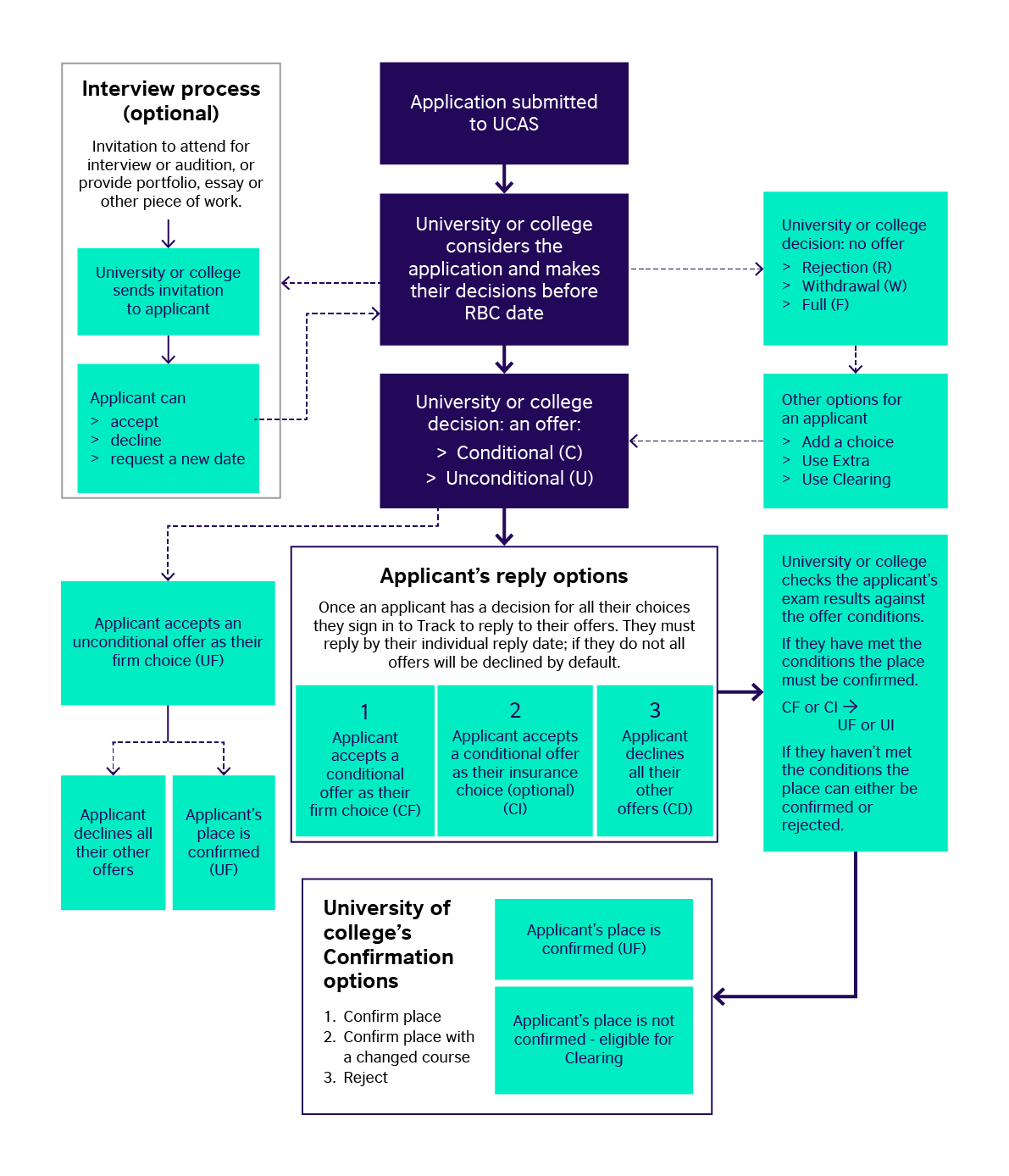
Most undergraduate applications in the UK are submitted through the Universities and Colleges Admissions Service, commonly known as UCAS.
UCAS is a centralised application system that allows students to:
Apply to multiple UK universities through one application
Submit academic qualifications, a personal statement, and references
Track application decisions in one place
International students usually apply through UCAS unless a university offers a direct application route. If students do not receive the offers or results they expected, options such as UCAS Extra or Clearing may allow them to secure an alternative place.
What happens after graduation?
After completing an undergraduate degree, students may:
Enter employment in the UK or internationally
Progress to a postgraduate degree
Gain professional experience through graduate roles
UK undergraduate degrees provide a strong foundation for both career development and further study.
How we support undergraduate applicants
Choosing the right course and university is an important decision, and entry requirements can vary by institution and subject.
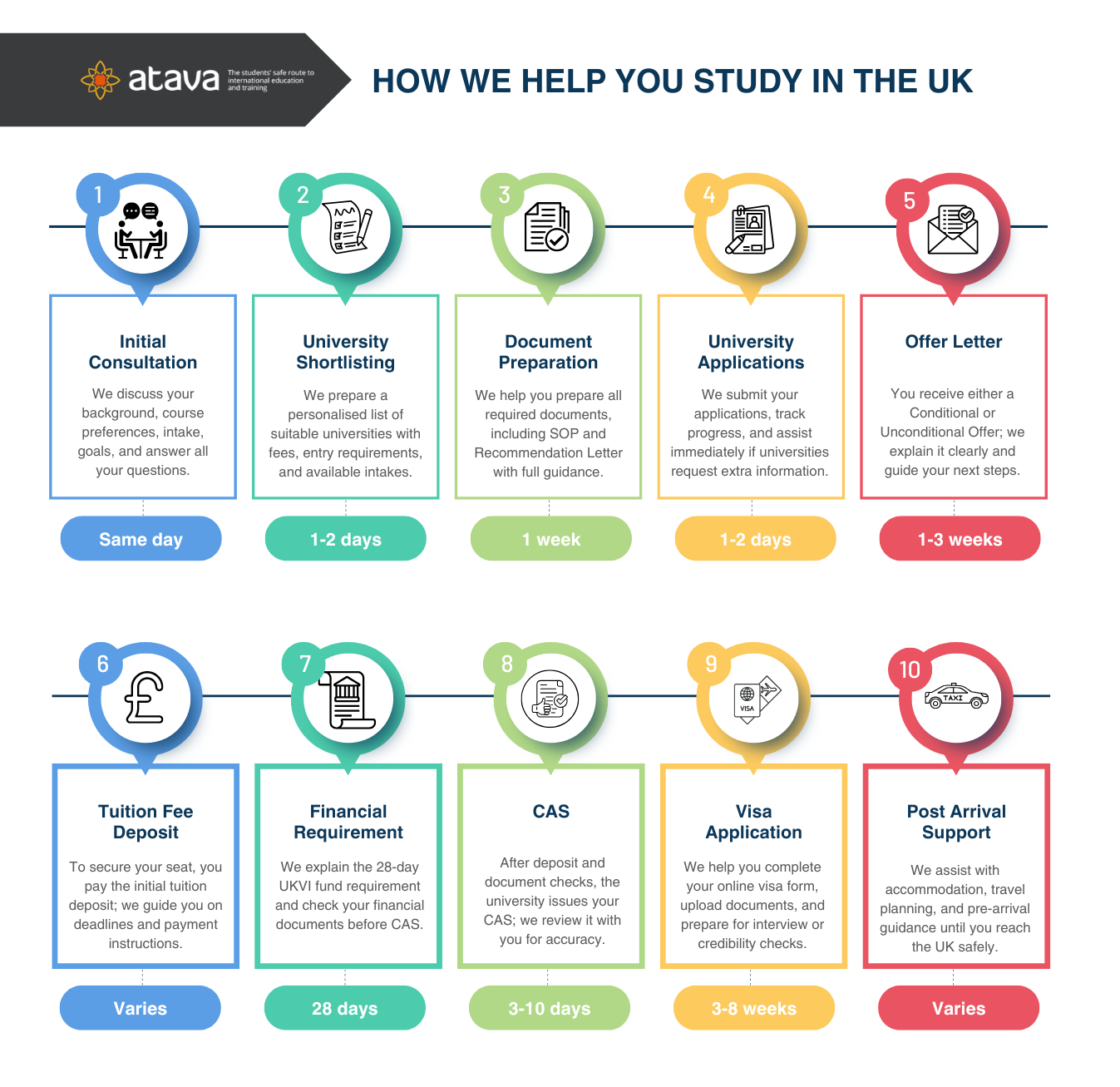
We support undergraduate applicants with:
Course and university selection
Entry requirement and eligibility guidance
UCAS application support
Advice on progression routes and next steps
Not sure if undergraduate study in the UK is right for you?
Our team can help you assess your qualifications and guide you towards the most suitable undergraduate degree and university.
Speak to us for personalised advice on undergraduate study in the UK.