

Accommodation While Studying in the UK
Finding the right accommodation is a key part of your study experience in the UK. Where you live will affect your comfort, budget, travel time, and overall student life.
The good news is that UK universities and cities offer a wide range of safe, regulated student accommodation options to suit different preferences and budgets.

The UK Student Accommodation Landscape
Student accommodation in the UK is widely available in all university cities and towns. Most options are either:
-
On or near campus, or
-
Within walking distance or a short commute to the university or college
In many cases, first-year international students are guaranteed accommodation through their university, especially for undergraduate courses.
Accommodation is typically rented:
-
Weekly (e.g. £180–£300 per week)
-
For a fixed contract length (often 40–51 weeks)
It is important to choose a contract that matches your course dates, as accommodation contracts are legally binding and cannot usually be ended early.
Typical Room Types and Pricing
Accommodation costs vary based on privacy and facilities:
-
Private Studio – highest cost
-
Own bedroom, bathroom, and kitchen
-
-
En-suite Room – mid-range
-
Private bathroom, shared kitchen
-
-
Shared Room / Shared Facilities – lowest cost
-
Shared bathroom and kitchen
-
Most purpose-built student accommodation includes:
-
Electricity, heating, water, and Wi-Fi
-
24-hour security or support
-
Laundry facilities
-
Shared social spaces
Full-time students are exempt from council tax. If requested, students can apply for a council tax exemption certificate through their university.
Types of Student Accommodation in the UK
University-Provided Accommodation (Halls of Residence)

Universities usually offer their own accommodation, often referred to as halls or on-campus accommodation.
How to book:
Students apply through the university accommodation office after receiving an offer.
Advantages
-
Managed directly by the university
-
Usually close to teaching facilities
-
Bills and Wi-Fi included
-
Residential Life teams for support
-
Contracts aligned with course dates
-
Strong social environment, especially for first-year students
Considerations
-
Limited room choices
-
Mostly first-year students living together
This option is strongly recommended for first-year international students.
Private Student Accommodation (Purpose-Built Student Accommodation)
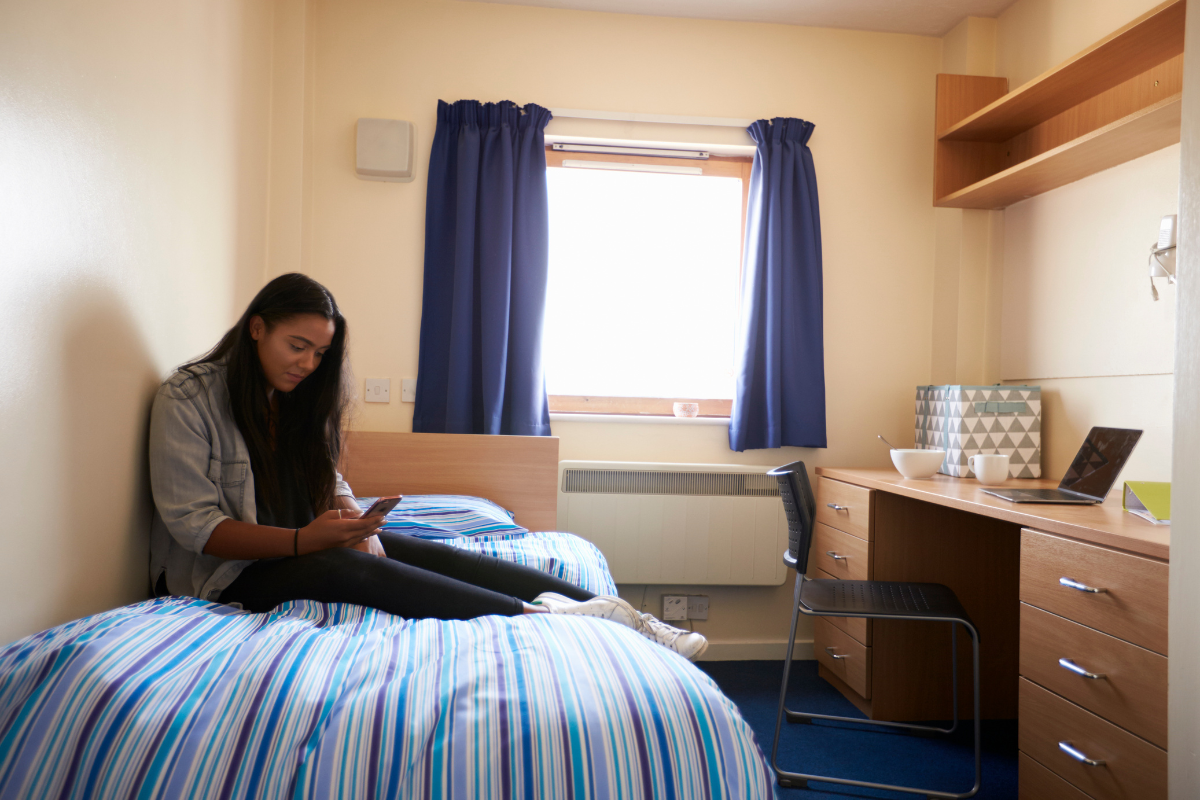
These are large, professionally managed student residences owned by private providers.
How to book:
Students book directly with the accommodation provider online.
Advantages
- More choice of room types and locations
- Often newer buildings
- Available to all years of study
- Social events and communal spaces
- Bills usually included
Considerations
- Contract dates may not always match course dates
- A UK-based guarantor may be required
- University support may be limited if issues arise
Students should always check if the provider is recommended by the university or part of a recognised accreditation scheme.
Homestay Accommodation

Homestay involves living with a local UK family.
How to book:
Through universities or British Council-registered homestay providers.
Advantages
- Excellent cultural immersion
- Helps improve English language skills
- Often more affordable
- Optional meal plans available
Considerations
- Less privacy
- Commute distance varies
- Limited social interaction with other students
Homestay is especially popular with English language students and younger learners.
Private Student Housing (Shared Houses / HMOs)

Students can rent rooms or entire houses with other students.
How to book:
Through university housing lists or local student letting agents.
Advantages
- Often cheaper
- Suitable for groups of friends
Considerations
- Utility bills may not be included
- Requires careful contract review
- Less formal support compared to halls
Accommodation for Students with Disabilities
Many UK universities and private accommodation providers offer accessible or adapted rooms.
Students should:
- Declare requirements early
- Speak directly with the university accommodation team
- Ask about reasonable adjustments under the UK Equality Act
How UK Student Accommodation Differs from Other Countries
Unlike some countries:
- Sharing bedrooms is uncommon in the UK
- Most students have their own private room
- Catering is usually optional, not standard
- Accommodation may be in historic or converted buildings
Facilities and layouts can vary widely between providers.
How Atava Can Help
Atava supports students with:
- Understanding accommodation options
- Choosing between university and private housing
- Homestay arrangements for English and foundation students
- Trusted accommodation providers in UK cities
You do not need to use our study services to receive accommodation support.
Some specialist services may involve a consultancy fee, which will always be discussed in advance.
Need help choosing accommodation for your course and budget?
Contact our team for personalised advice and trusted options based on your study plans.